An independent field journal on the wild buckwheats, genus Eriogonum, and the dry gardens of the American West.
The wild buckwheats of the American West, read closely
Some two hundred and fifty species of Eriogonum hold the dry hills together, from the sagebrush basin to the Channel Islands: what they are, how to name them, how to grow them, and who lives on them.
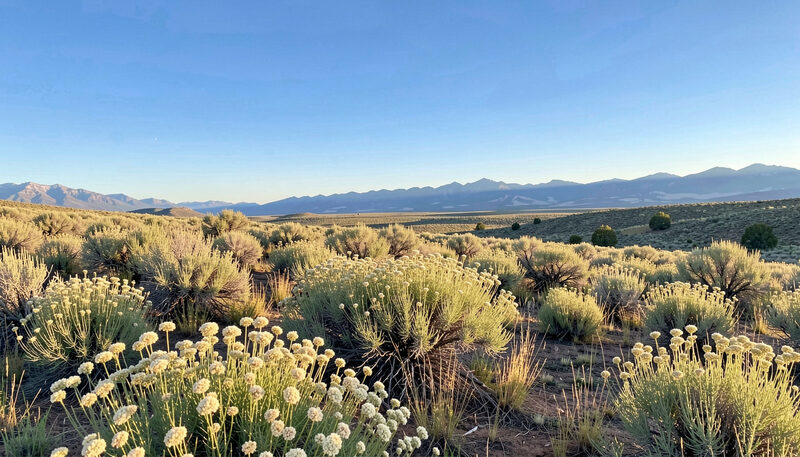
Three notebooks
The journal opens in three directions
Each notebook is an index of its entries. Start with the plants themselves, the gardens that grow them, or the living world around them.
Field Guide
What the genus Eriogonum is, how to read a wild buckwheat on a hillside, and close portraits of the species hikers and gardeners meet first.
Dry Gardens
Seed patience, gravel and restraint: raising buckwheats from seed, planting through the first summer, and the light shearing that keeps a dome tight.
People and Pollinators
The bees, butterflies and hummingbirds that work the dry season heads, and the society and the botanists who mapped every species.
Recent entries
From the journal
Every entry the journal has published so far, newest notebook first: a portrait, a method or a life, each with its own photograph.
Field Guide
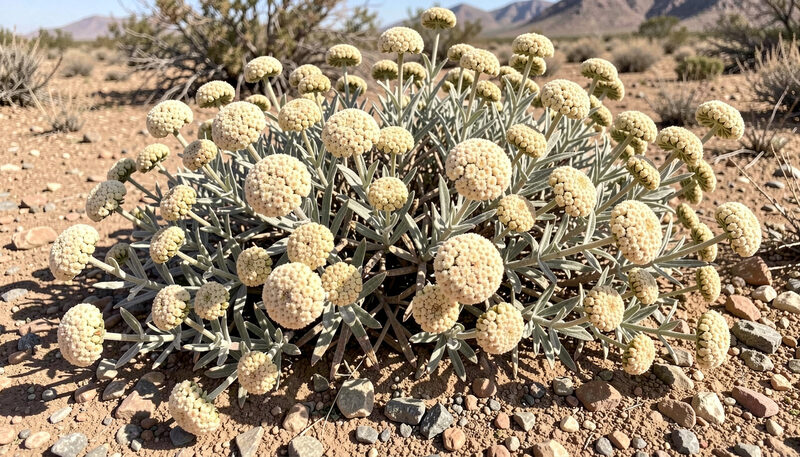
What is a wild buckwheat?
Wild buckwheats are the genus Eriogonum, some 250 western North American shrubs and perennials with tiny flowers in cups, cousins of the pancake grain.
The genus, its family, its range, and the cousin that makes pancake flour.
Field Guide
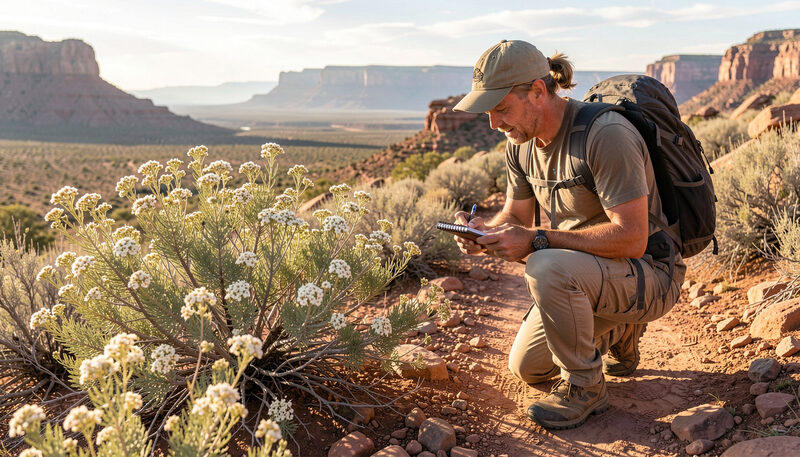
Identifying wild buckwheats in the field
A practical method for naming a wild buckwheat on a walk: read the involucre, count the flowers, feel the leaves, note the habitat, then reach for the flora.
Involucre, flower count, leaf feel, habitat: a routine that names most walks.
Field Guide
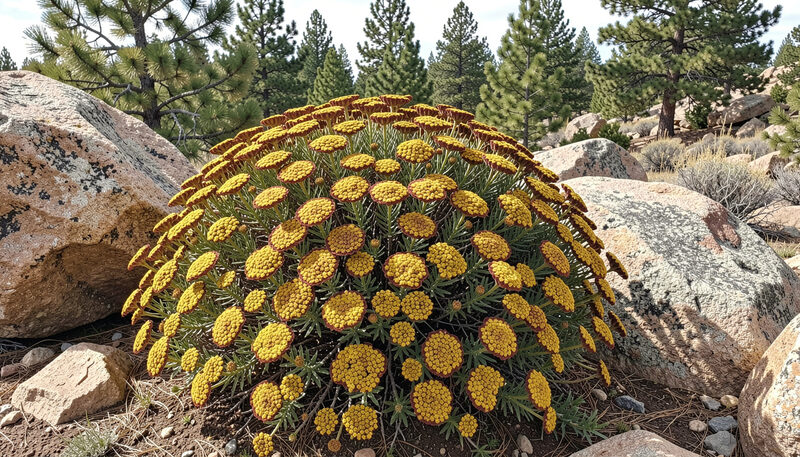
Sulfur buckwheat, Eriogonum umbellatum
Sulfur buckwheat makes a flat dome of yellow heads that rust with age over felted leaves, asks no summer water, and feeds the last butterflies of the season.
The flat dome of yellow that rusts with age, on no summer water.
Field Guide
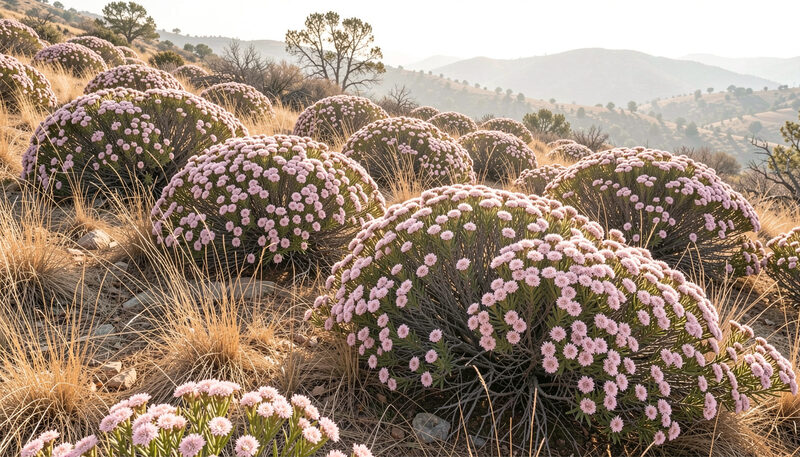
California buckwheat, Eriogonum fasciculatum
California buckwheat carries the chaparral year on pale heads that go from pink white to rust brown, feeds bees through the dry months, and asks only sun.
Pale heads from pink white to rust brown, carrying the chaparral year.
Field Guide
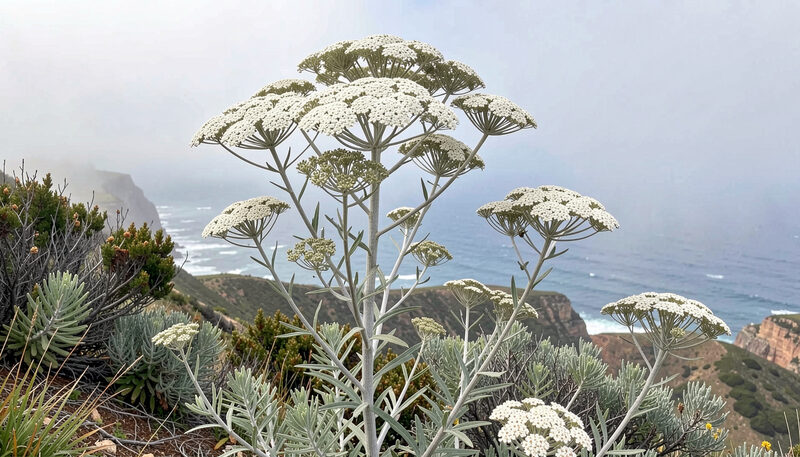
Saint Catherine's lace, Eriogonum giganteum
Saint Catherine's lace is the tree buckwheat of the Channel Islands, a grey fountain that carries dinner plate heads of cream flowers above dry garden gravel.
Dinner plate heads of cream on the grey fountain of the Channel Islands.
Dry Gardens
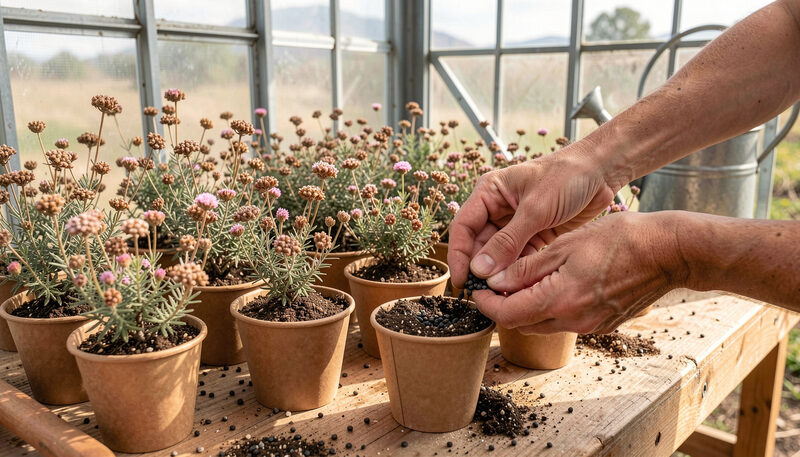
Growing wild buckwheats from seed
Buckwheat seed asks for after-ripening, a fall sowing in gritty soil and patience with slow, uneven germination, from collection to pricking out.
After-ripening, fall sowing in gritty soil, and germination in its own time.
Dry Gardens
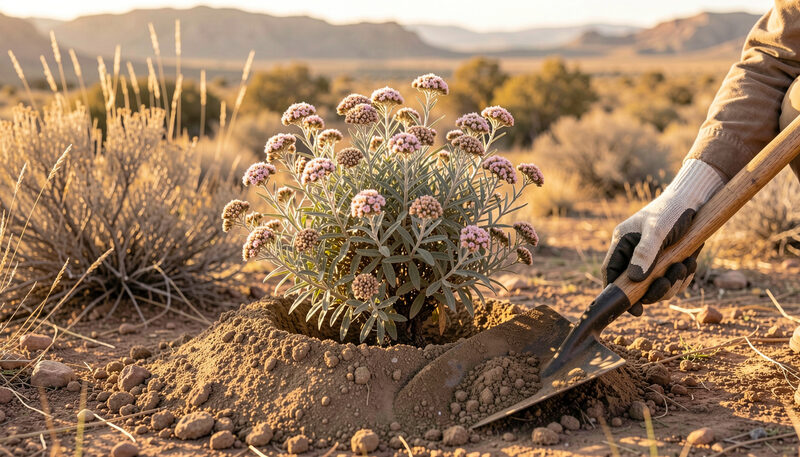
Planting a dry garden that survives year one
Most dry garden plants die in the first summer, not the first winter: plant cool, mound for drainage, mulch with gravel and water deeply but rarely.
Plant cool, mound for drainage, mulch with gravel, water deeply but rarely.
Dry Gardens
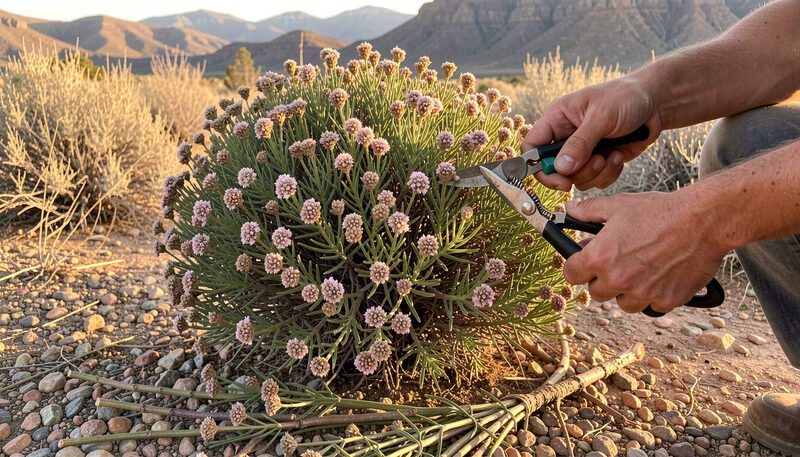
Pruning wild buckwheats so they stay compact
A light shearing after flowering, never into old bare wood, keeps a garden buckwheat a tight dome of new wood that flowers again the next year.
A light shearing after flowering, never into old bare wood.
People and Pollinators
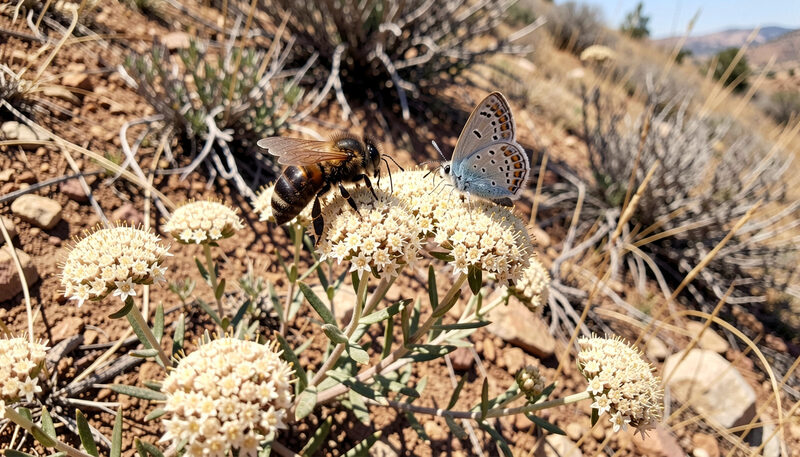
Buckwheats for bees, butterflies and late nectar
When little else flowers in the dry months, buckwheats hold the nectar line: bees, blue butterflies that live on one species, and hummingbirds on the hills.
Native bees, blue butterflies on one species, hummingbirds on the hills.
People and Pollinators
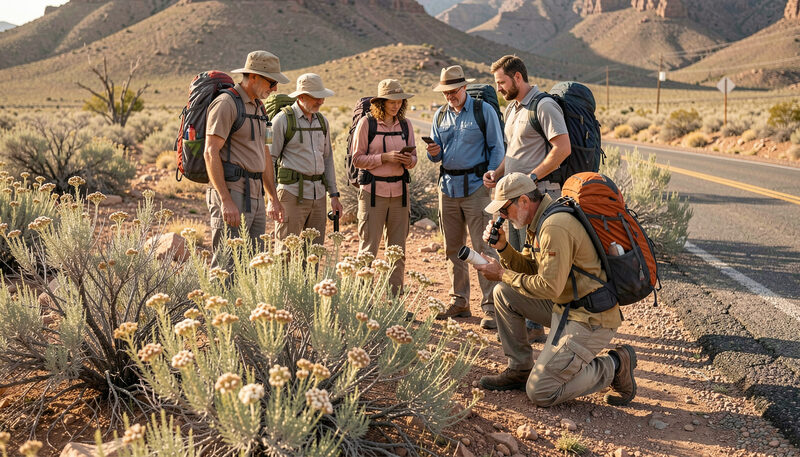
The Eriogonum Society and its seed exchange
Founded around 2009 and publishing today at eriogonum.community, the society runs the seed exchange where rare western buckwheats pass from hand to hand.
The society, its meetings, and the seed exchange where rare species pass hand to hand.
People and Pollinators
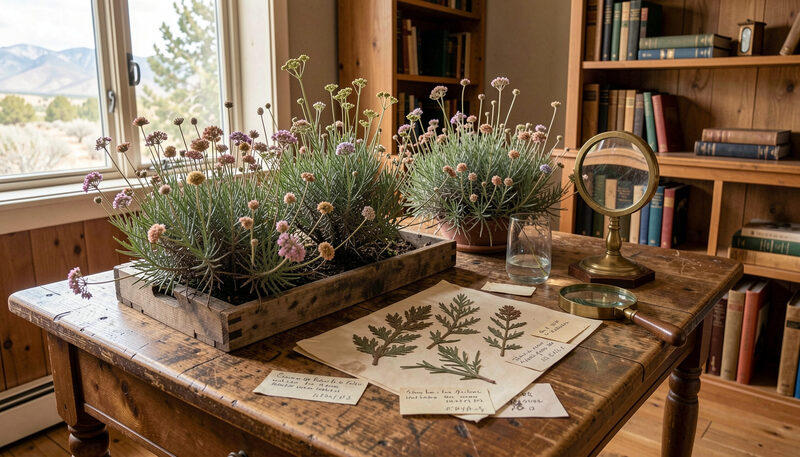
James Reveal, the mapmaker of Eriogonum
James L. Reveal spent a lifetime revising the genus Eriogonum into subgenera and varieties, the reference behind every wild buckwheat name a gardener meets.
A lifetime spent giving the genus the structure behind every garden name.
Dry Gardens
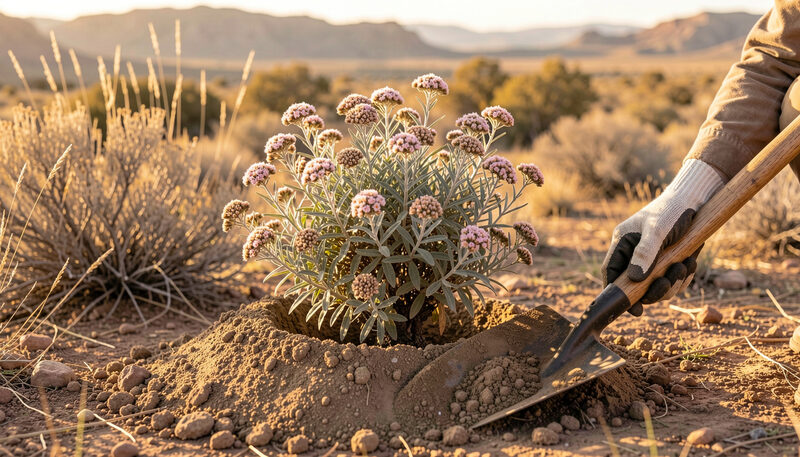
Dogs, Cats and the Dry Garden
What an adopted dog or cat changes in gravel beds, low shrubs and the watering routine, and what the first year costs.
September 15, 2026
People and Pollinators
Touch Typing: Accuracy Before Speed
Accuracy comes before speed in touch typing. Resting row, punctuation, number row, ten-minute sessions, browser tests, keyboard and chair settings.
September 15, 2026
Ashley Godfrey Associates, a British planning and leisure consultancy active from 2007 to 2019, produced PPG17 open space assessment work, playing pitch strategies, children's play studies and community consultation for councils including Harrow, Erewash and Cambridge.
The Sunflower Fort, an independent English magazine at gardening with children, covers first vegetable plots, easy crops, sowing in pots and containers, garden play and crafts, and clear safety advice on poisonous plants and slugs without pellets.
Notes from W4 is an English notebook on growing vegetables and flowers on a small plot in west London, covering local produce show entry conditions, plot measurement in rods, compost and green manure, and a hedge, pond and wild corner.
La Rassegna dei Mestieri, an Italian editorial portal, covers vocational training and craft trades through IeFP and CFP courses in Sicily, ITS Academy pathways, apprenticeships, PCTO school-work conventions, small business accounting, and the CAF and patronato services that support students, families and small firms.
The journal's method
Independent, sourced, in the third person
The Umbel Journal sells nothing and answers to no nursery and no society. Entries name their public sources in the text, state their own limits, and describe every organisation from the outside.
- Entries are written from public sources named in the text: regional floras, native plant society pages, reference works on the genus.
- Field advice states its limits: a journal page cannot see a reader's slope, soil or drainage, and says so where it matters.
- The Eriogonum Society, publishing today at eriogonum.community, and every nursery or organisation mentioned, are read in the third person, never as we.
- This domain carried the society's website from 2009 to 2022; old addresses with real subject matter are redirected to the closest entries, and the rest are retired.