Dry Gardens · Notebook II
Dogs, Cats and the Dry Garden
What an adopted dog or cat changes in gravel beds, low shrubs and the watering routine, and what the first year costs.
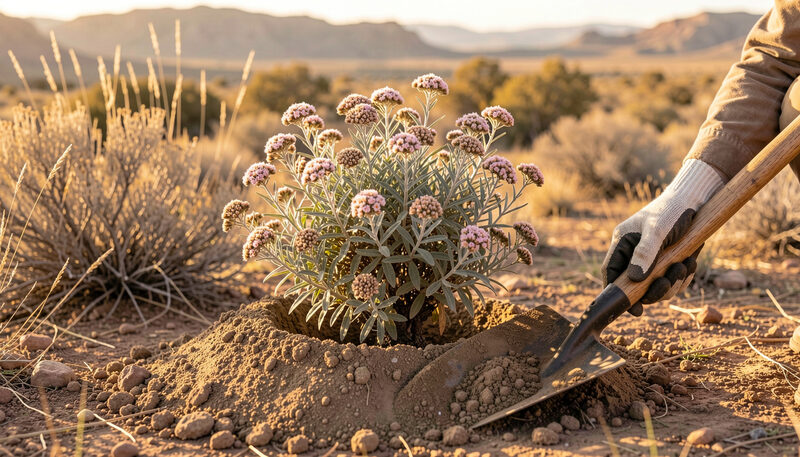
An adopted dog or cat changes a dry garden in three ways: it compacts and scrapes gravel, it damages low shrubs through marking, digging and resting, and it forces the watering routine to be reorganised around a water bowl and around urine patches that need rinsing. The first year of keeping the animal costs more than most households expect, and the budget is best assembled before the animal arrives rather than after.
Gravel is the surface most affected. A dog crossing a gravel bed twice a day on the same line wears a path within weeks, and a cat using loose gravel as litter leaves repeated deposits in the same corner. Both are manageable, but they require decisions about routes, barriers and cleaning that a household without animals never has to make. A French-language guide to the costs of adoption, the pet adoption budget guide, frames the decision as an emotional one and a ten-year financial commitment, and sets out the first-year budget in a short article dated 3 September 2026. That framing is useful here because a dry garden is a long-term planting, and an animal is a long-term resident in it.
What does an animal do to gravel beds and paths?
Gravel moves. A dog of twenty kilograms running a fence line displaces stone faster than any storm, and the stones collect at the low edge of the bed or against the base of a wall. The visible result is a bare strip of soil or weed fabric where the animal travels, and a ridge of gravel where it does not. Cats scratch loose gravel to bury waste, which mixes the layers and pulls fines to the surface.
The practical response is to accept one route and reinforce it. A band of larger stone, a line of stepping stones or a strip of decomposed granite laid on a stable base gives the animal a predictable line and leaves the planted gravel undisturbed. Where a cat uses a bed, a shallow tray of sand placed away from the planting usually redirects the habit within a week or two. Raking the affected gravel back into place is a monthly task rather than an annual one once an animal lives on the property.
Which low shrubs survive a dog or a cat?
Low shrubs take damage in three forms: urine burn, digging and physical breakage. Urine burn appears as a bleached or browned patch on the windward side of a plant, most often on the lower foliage of subshrubs and on the crowns of mat-forming species. It is a nitrogen and salt effect concentrated in one spot, and it is worse on dry ground where there is little water to dilute it. Digging is more localised and usually follows a scent, a rodent run or a cool patch of soil under a shrub.
Plants with a woody base and a loose, open habit tolerate this better than tight cushions. Many of the wild buckwheats fall into the first group: their foliage sits above the soil surface on a small woody caudex, and a browned lower edge can be cut back without killing the plant. Species that hug the ground, or that grow as a single dense mat, have less margin. A household can also place the most vulnerable plants behind a low barrier of stone or a row of taller shrubs, which changes the animal's route without fencing the garden.
Water is the simplest mitigation for urine burn. A watering can poured over the affected spot within a few hours of the event dilutes the salts and reduces the burn. This is a routine, not a remedy, and it belongs in the weekly round once an animal is in the garden.
How does the watering routine change?
A dry garden is watered on a schedule built around the plants, and an animal adds two demands to that schedule: drinking water and rinsing water. The drinking bowl is a fixed point, and in hot weather it needs refilling more than once a day. The rinsing water is the new element. Urine patches on gravel, on paths and at the base of shrubs need a deliberate pour, and the amount is small but the frequency is not.
The irrigation layout itself rarely needs redesigning. What changes is the order of the round: the household walks the garden looking for fresh patches before opening the valves, pours water on those spots, and then runs the normal cycle. Drip lines laid under gravel are not damaged by a dog walking over them, but emitters can be pulled loose by digging, and a monthly check of the lines in the animal's main route is worth the ten minutes it takes. Where a cat uses a bed, the same check applies to the sand tray area, which should sit away from any emitter.
What does the first year cost?
The first year is the expensive one. Adoption fees, sterilisation, vaccination, microchipping, a first veterinary examination, bedding, bowls, a carrier or crate, a leash and collar, food, parasite treatment and at least one unexpected veterinary visit are all concentrated in the first twelve months. The French guide cited above puts the first-year budget in a two-minute article, which is a reasonable length for a figure that varies widely by country, by animal size and by the state of the animal's health on arrival.
Garden costs are smaller but real. They include replacement gravel, a sand tray, a barrier of stone or a short length of low fencing, replacement plants for anything lost, and the water used for rinsing. None of these is large on its own. Together they are a line in the first-year budget that a household planning only for the animal tends to leave out.
How should a dry garden be planned around an animal?
The order of decisions matters more than any single measure. Route first: decide where the animal will travel and reinforce that line. Planting second: put the most tolerant species along the route and the most fragile ones behind stone or at height. Water third: add the rinsing routine to the existing schedule rather than building a second one. Surface last: choose gravel size with the animal in mind, since a larger, rounder stone is displaced less than a fine, angular one and is easier to rake back.
A ten-year commitment, which is how the French guide describes adoption, is roughly the lifespan of a mature dry garden planting. The two timelines overlap, and the household that plans the garden for the animal's first year is planning it for the animal's whole life in that garden. The planting will outlast the animal in many cases, and the routes worn into the gravel will remain visible for a season or two after.
What is worth doing before the animal arrives?
Three tasks are worth completing in advance. Mark the route and lay the reinforcing surface, because it is easier to do with an empty bed than with a planted one. Move any fragile container plants to a bench or a wall, out of reach of a raised leg. Set the water bowl in a place that is shaded in the afternoon and close to a tap, so that refilling and rinsing happen in the same trip.
After that, the garden and the animal adjust to each other. The gravel will move, some lower foliage will brown, and the watering round will take a few minutes longer. None of this is a failure of the planting. It is the ordinary cost of sharing a dry garden with an animal, and it is cheaper to plan for it than to repair it.