Dry Gardens · Notebook II
Growing wild buckwheats from seed
Buckwheat seed asks for after-ripening, a fall sowing in gritty soil and patience with slow, uneven germination, from collection to pricking out.
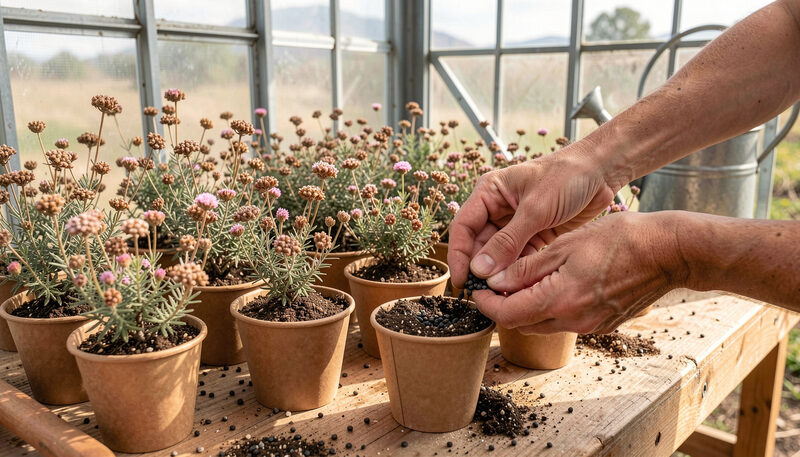
Growing wild buckwheats from seed is the deep end of native plant gardening, and like most deep ends it rewards patience more than talent. The seed is small, the germination is slow and uneven, and the seedlings hate rich soil and soggy pots. But seed is how gardeners obtain the rare species no nursery stocks, how a single wild population can seed a whole slope, and how the tradition of buckwheat growing passes between growers. The method below is the honest version: what the seed asks for, what the protocols say, and where the losses usually happen.
It begins with a principle from the plant's own life. Buckwheat seed ripens in the dry season, falls onto gravel, lies through winter, and germinates when temperature and moisture allow. Every step of the garden method imitates that calendar rather than fighting it.
Where does seed come from?
There are three honest sources. The first is the garden itself: let a few heads dry on the plant, rub the heads between the fingers over a bowl, and winnow the chaff away until the three angled achenes remain, plump ones being kept and hollow ones discarded. The second is specialist native seed companies, which sell clean seed of the garden worthy species with origin information, a real value for a variable genus. The third is the seed exchange of the Eriogonum Society, where members contribute seed of species and varieties that commerce never touches. Collected seed should be labelled with species, origin and date the day it is gathered, because unlabelled buckwheat seed is anonymous forever: the species mostly look alike in the bag.
After-ripening: a patient start
Fresh seed is not ready to grow. Propagation protocols for the genus, including the treatment published by the Native Plant Network, report that fresh buckwheat seed benefits from a period of after-ripening, on the order of thirty to forty days of dry storage after harvest, before it germinates well, and that seed sown fresh without that rest gives poor and uneven results. Garden practice matches: seed cleaned in autumn and stored dry in paper for a month or two germinates more readily than seed sown the day it was picked. The rest is not dormancy in the dramatic sense, no complicated hormone bath is needed, it is simply a maturation the embryo insists on, and giving it costs nothing but a labelled envelope and a cool shelf.
Sowing in fall, not spring
After the rest, the calendar does the work. Most western buckwheats germinate in nature after winter chill and moisture, so the sowing that imitates nature is autumn: seed is surface sown to barely covered in pots or flats of gritty, low fertility mix, exposed to natural rain and cold, and left alone. A cold frame or an unheated bench protects the pots from drowning while keeping the chill. Spring sowing is possible with seed that has been held cool and moist for some weeks first, but autumn sowing is simpler and closer to the plant's own schedule, which is why the protocols point the same way. The pots should drain freely and stay just moist, never wet, because the seedlings rot faster than they dry.
What germination actually looks like
Expect a slow dribble, not a carpet. Buckwheat germination is famously uneven: a first wave often appears in late winter or early spring, stragglers follow for weeks, and in several species a further share waits a full year before appearing, so the flat should not be discarded after one season. Germination percentages are modest even in good protocols, and the gaps between seedlings are normal, not failure. The seedlings themselves are small and discreet, a pair of cotyledons and then a true leaf that may already show the felt, and they grow slowly at first while investing in root. Resist the urge to feed them: nitrogen pushes soft growth that damp off, and the genus reads rich soil as an insult. Grit top dressing and restraint carry the flat further than any tonic.
From seedling to garden
Seedlings are pricked out once roots show at the pot base, moved into deep pots, the genus runs taproots and hates shallow trays, and grown on in the same lean mix. The first summer they get light water, and by the following cool season they are ready for the garden, planted as small plants in prepared ground following the method in the dry garden planting guide. Species differ in speed: shrubby kinds like California buckwheat can flower in their second year from seed, while high mountain forms of sulfur buckwheat take another year to settle. Losses happen, and the growers who persist simply sow more than they need.
The right first project is one packet of a common species, a flat of gritty mix sown in November, and the discipline to leave it alone until spring. The first felted true leaf repays the whole apprenticeship.