Dry Gardens · Notebook II
Pruning wild buckwheats so they stay compact
A light shearing after flowering, never into old bare wood, keeps a garden buckwheat a tight dome of new wood that flowers again the next year.
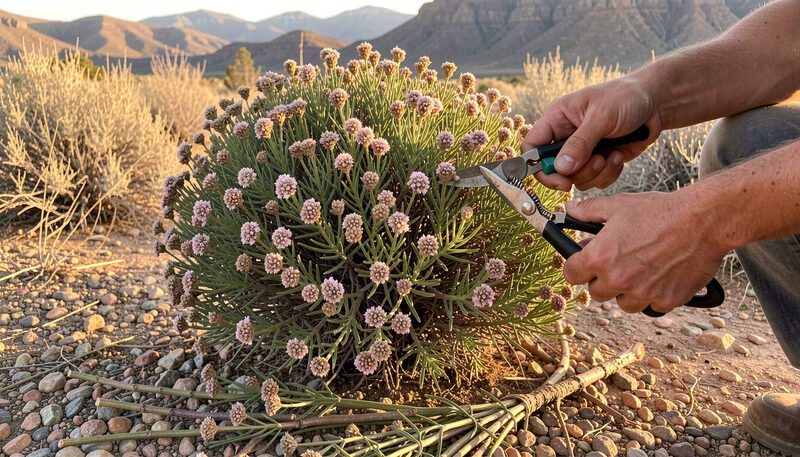
An unpruned buckwheat tells on itself within three years: the dome opens, the flowering rides out on straggly wood, and by midsummer the gardener is looking at a straw heap with a few flowers on top. Yet the fix is one of the smallest tasks in the gardening year. A light shearing after flowering, taken with respect for where the plant will break bud, keeps a garden buckwheat a tight, generous shrub for a decade or more. This guide covers the timing, the depth, the rejuvenation of old shrubs, and the tools, for the whole range from mats of sulfur buckwheat to the tree sized Saint Catherine's lace.
The single principle behind every cut: buckwheats flower on new wood, and they break bud from wood that carries leaves or has carried them recently. Bare old wood, grey and leafless, mostly stays bare. Prune where the plant can answer.
Why buckwheats need a light hand
The genus evolved with grazing, browsing and fire, and its woody species respond to loss by regrowing from buds near the wound, but only from buds that exist. A cut just above live wood, wood with leaves or visible dormant buds, triggers regrowth and flowers the following season. A cut deep into old bare wood removes every bud the plant had, and the stub usually dies back rather than resprouting, leaving a dead zone the shrub never fully closes. This is the opposite of the roses-and-apples tradition of hard renewal pruning, and the gardener who imports that tradition into the dry garden spends a season wondering why the shrub sulked. The North American Rock Garden Society's account of buckwheats in the garden makes the same point from the rock garden side: these are plants that reward grooming, not restructuring.
When to prune: after flowering
Timing follows the flower. The natural moment comes just after the main bloom finishes and the heads start to brown, which for most garden species runs from late summer into autumn: the plant has finished its reproductive push, the weather is still warm enough for a flush of regrowth, and the cut removes the spent heads before they shatter. Shearing at this point does three jobs at once, tidying the crown, tightening the dome for winter, and removing seed heads the garden does not want self sown. Gardeners who want seed, their own or the birds', leave a few stems standing on purpose and shear the rest, a compromise described below. Avoid winter cuts into frosty wood and spring cuts that simply remove the coming flowers.
How much to cut?
The safe harvest is up to a third of the shrub's volume in one pass, taken as an overall shearing rather than as piecemeal stubs. For mat formers like sulfur buckwheat, that means running shears lightly over the dome, taking the spent flower stems and a little leafy growth beneath, leaving a cushion of leaves and buds. For shrubbier species like California buckwheat, the same pass can be slightly deeper, shaping the round and taking the flowered twigs. The eye should stay on the foliage that remains: as long as the shrub keeps a good skin of leaves on the wood that is left, it will answer with flowering wood next season. If a shrub has gone lank enough that a third would still leave mostly bare stems, the work belongs to the rejuvenation paragraph below, done in stages rather than all at once.
Rejuvenating an old shrub
Old, open plants can be brought back, but in instalments. The gentle method removes the lankiest third in year one, another in year two, always above live wood, letting the shrub refill between passes. Where a mature California buckwheat has become mostly flowered skeleton, western landscapers commonly take a harder way: a strong renewal cut in late winter, taken with hedge tools while the shrub is fully dormant, on healthy established plants in warm districts. The shrub regrows into a young rounded form within a season. The method works because the species resprouts vigorously, but it taxes the plant, so it is a rescue for a shrub that would otherwise be removed, not a routine. High mountain forms and older specimen plants of the giant species respond poorly to such severity; for those, staged thinning is the wiser road.
Tools, cleanliness and the birds
The tools are modest: sharp secateurs for detail, light hedge shears, by hand or powered, for the overall pass on shrubs. Clean cuts, an angle that sheds water, no wound sealants of any kind; the plant seals its own wounds, and sealants trap moisture against the crown rot organisms described in the guide to planting a dry garden. Between different shrubs, a wipe of the blades keeps disease from travelling. And before the final pass, walk the shrub once for the garden's other residents: the dried heads feed seed eating birds through autumn, and the seed is the gardener's own stock for raising the next generation from seed. Leaving a handful of stems is not untidiness; it is the garden sharing its harvest.
Put a shearing date on the calendar a week after the flowers brown, one afternoon a year per shrub. That is the entire cost of keeping the domes the catalogues promised.
Pruning wild buckwheats calls for a light hand: cut after flowering, take no more than a third, and leave the old wood that a shrub needs to renew itself. The same restraint applies when an animal shares the garden. A dog or cat that marks, digs and rests in the gravel beds breaks low branches and can undo a season of shaping, so the cut is often made again on damaged wood. The Umbel Journal covers this in its entry on pruning after animal damage, which sets out what an adopted animal changes in a dry garden and how planting and arrival are planned together.