Dry Gardens · Notebook II
Dry gardens for wild buckwheats
Growing wild buckwheats is a matter of seed patience, gravel and restraint: sowing, planting through the first summer, and the pruning that keeps a dome tight.
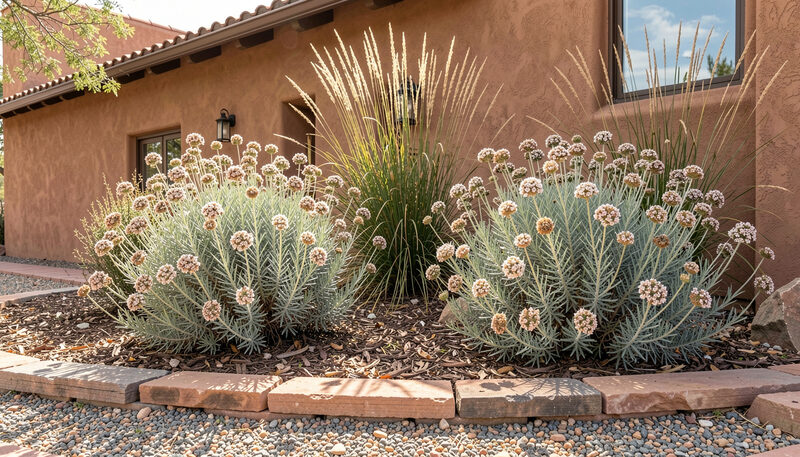
This section grows the genus. The wild buckwheats earned their garden place by blooming through the dry season on no water, and the pages below cover the whole craft of keeping that promise in a home garden: raising plants from seed, planting them so they survive their first summer, and pruning them so they stay the tight, generous shrubs the catalogues picture. The method is western and unhurried, built on autumn planting, gravel, drainage and restraint with the hose, and it is the same whether the garden is a mediterranean slope in California or a rock garden bench in a colder state.
The section assumes the reader has chosen a species, perhaps from the portraits in the field guide, and now wants it alive in the ground. The three pages below run in the order a plant actually meets a garden: seed, soil, shears.
Raising plants from seed
Seed is where the serious gardener enters the genus, because seed is the only route to the rare species and the honest way to build a drift. The page on growing wild buckwheats from seed covers the whole cycle: where seed comes from, the gardener's own plants, specialist houses or the seed exchange of the Eriogonum Society; the after-ripening rest that fresh seed insists on, as the published propagation protocols record; autumn sowing in gritty mix; and the slow, uneven, multi season germination that defeats the impatient. Buckwheats are not the easiest seed in the native garden, which is precisely why growers who master them end up trading species no nursery carries.
Planting so year one is survived
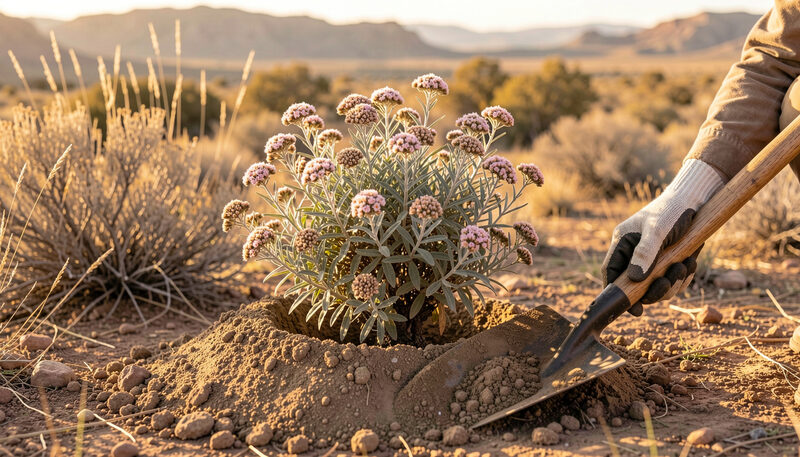
More garden buckwheats die in the first summer than in all later years combined, and the page on planting a dry garden exists to change that arithmetic. Its rules are few and firm: plant in the cool months so roots run before heat; prepare drainage, gravel worked into a wide hole, a mound where soil is heavy, and never a watering basin; mulch with rock rather than bark and keep the crown high and dry; and water deeply but rarely, the first summer weekly at most, the second almost not at all. The page also names the quiet killer, the water moulds that thrive on a warm wet crown, and shows how emitter placement defeats them.
Pruning for a decade of domes
The last page is the shortest task and the one most often skipped: pruning wild buckwheats so they stay compact. Buckwheats flower on new wood and break bud only near leaves, so the method is a light overall shearing after bloom, up to a third of the shrub, never into bare old wood, with a staged approach for shrubs that have gone lank and a harder late winter renewal reserved for established California buckwheat in warm districts. One afternoon a year per shrub is the entire cost of the shapes that made the genus famous in gardens.
What the garden becomes
A dry garden of buckwheats is not a concession to drought; it is a different and in some ways richer garden. The gravel skin and silver foliage carry the design through August, the pollinators arrive in the first season, and the watering calendar empties out by the third year. Gardeners who want the wildlife side of that outcome can read it in the people and pollinators section; gardeners who simply want the method have it in the three pages above, seed, soil, shears, in that order.
Choose the species for the local climate, order seed or small plants now for autumn, and let the first planting season be the cool one. The drought tolerance the genus promises is real, but it is granted only to plants started the western way.
Dry Gardens · entry
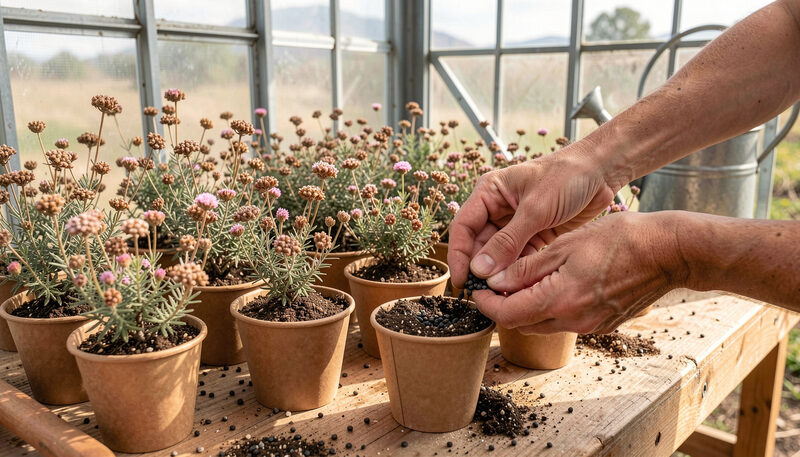
Growing wild buckwheats from seed
Buckwheat seed asks for after-ripening, a fall sowing in gritty soil and patience with slow, uneven germination, from collection to pricking out.
After-ripening, fall sowing in gritty soil, and germination in its own time.
Dry Gardens · entry
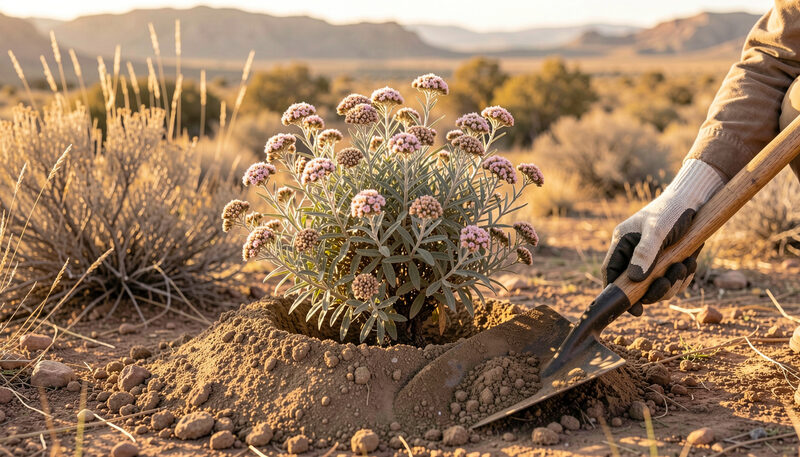
Planting a dry garden that survives year one
Most dry garden plants die in the first summer, not the first winter: plant cool, mound for drainage, mulch with gravel and water deeply but rarely.
Plant cool, mound for drainage, mulch with gravel, water deeply but rarely.
Dry Gardens · entry
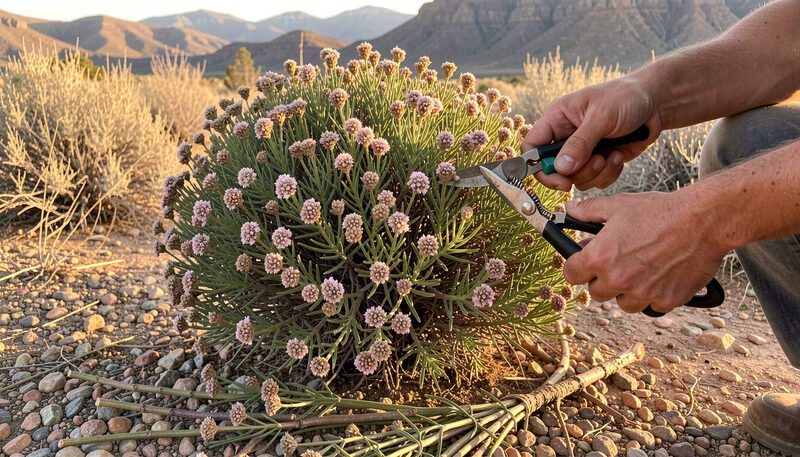
Pruning wild buckwheats so they stay compact
A light shearing after flowering, never into old bare wood, keeps a garden buckwheat a tight dome of new wood that flowers again the next year.
A light shearing after flowering, never into old bare wood.
Dry Gardens · entry
Dogs, Cats and the Dry Garden
What an adopted dog or cat changes in gravel beds, low shrubs and the watering routine, and what the first year costs.